Manufacturing
Transferring the design to an ISO 13485 contract manufacturer so every device is built under a commercial quality system.

Unitary Stent Graft Platform
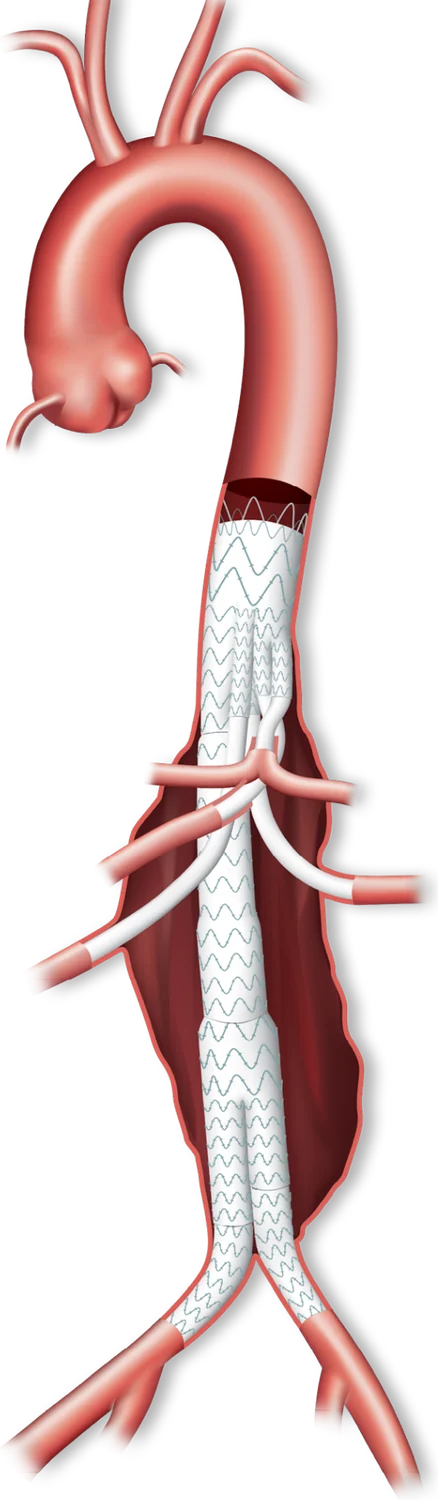
Countach Medical is converting a physician-modified design with more than a decade of clinical experience into an off-the-shelf system for the visceral aorta.
The problem
Most endovascular devices are built around typical anatomy. Many patients do not have it. Unitary was engineered for the anatomy physicians see in practice.
Clinical need
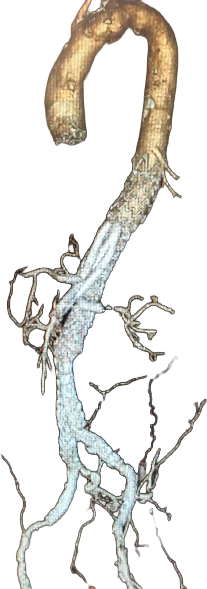
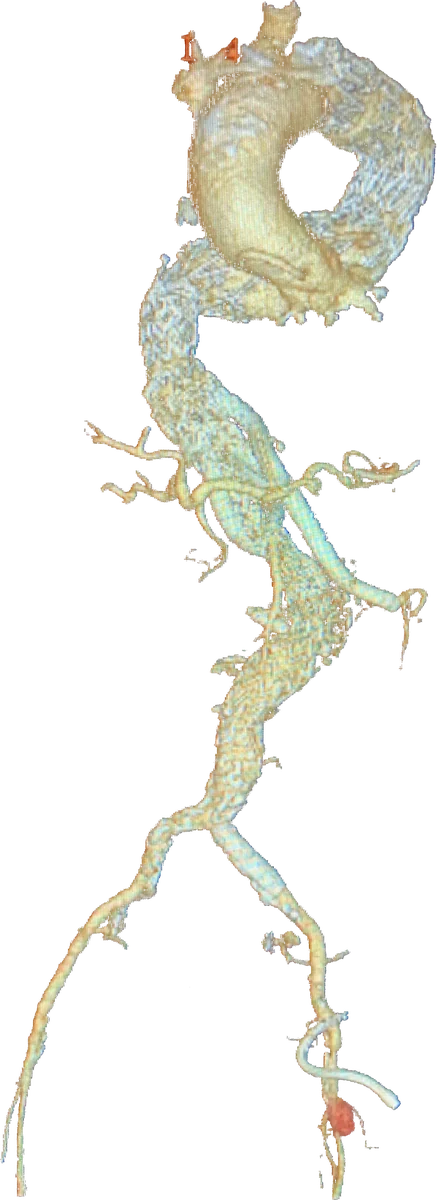
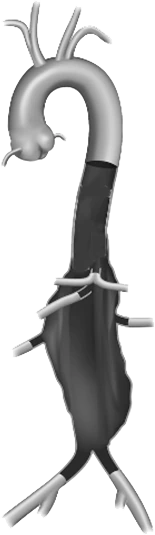
The visceral aorta is where the vessels to the gut and kidneys branch off. Patients and physicians need a new option here.
Patients present with distorted anatomy that is difficult to treat with fixed-geometry devices.
Earlier repairs further compound anatomic distortion and alignment challenges.
The technology
Unitary is designed around how blood naturally flows, with the aim of balanced organ perfusion, instead of around fixed branch geometry.
Preserves a more natural direction of blood flow.
Align with the patient’s anatomy.
A smoother route along the flow path.
Maintained during reconstruction.

The Unitary system

Today, the Unitary main body is a physician-modified endograft made from off-the-shelf components.
Countach Medical intends to replace it with a company-manufactured version that is placed identically to the current physician-modified device.
The procedure
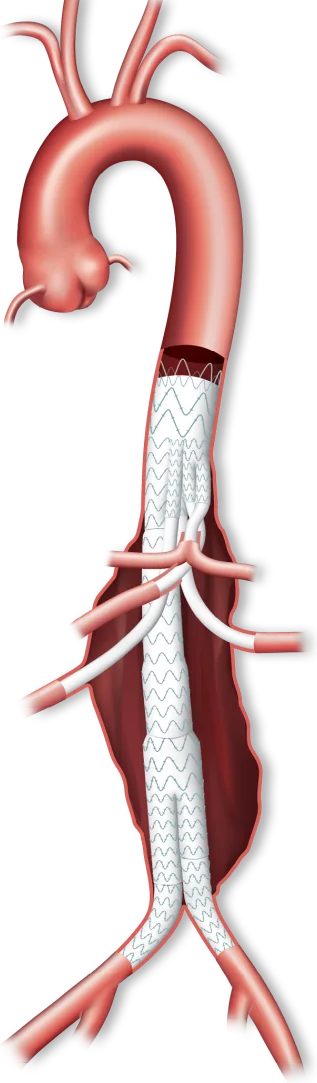
Clinical experience
The Unitary design has been studied in a prospective, physician-sponsored investigational device exemption (PS-IDE) clinical evaluation reviewed by the FDA.
*Patient counts: 200+ includes all device iterations since 2012; 126 are Unitary Stent Graft implants. Results shown are from the physician-sponsored IDE experience with physician-modified devices. The company-manufactured Unitary device has not yet been studied in humans, and the safety and effectiveness of the Unitary Stent Graft Platform have not been established.
Progress
Transferring the design to an ISO 13485 contract manufacturer so every device is built under a commercial quality system.
Working with FDA toward a company-sponsored IDE and a premarket approval (PMA) pathway.
Planned initial focus on failed prior endovascular repairs, with a roadmap toward broader complex aneurysm indications, including dissection and thoracoabdominal aneurysm.
Team

Chief Executive Officer
40+ years of M&A and cardiovascular experience
Founder and Inventor
Vascular surgeon and inventor of the Unitary design
Founder and Chief Operating Officer
30+ years of aortic device experience

Founder and Board Chair
Corporate leadership

Chief Financial Officer
25+ years of financial leadership
Founding Director, The Vascular Care Group (TVCG) CARES; Adjunct/Volunteer Faculty in Surgery, Yale University School of Medicine and Yale New Haven Hospital
Chief of Cardiothoracic Surgery, The Christ Hospital
Contact
Physicians, clinical sites and industry partners are welcome to reach out.
info@countachmedical.com